-
Visit

 No:3
No:3

If this article qualifies as an investigative one, we however mainly classified it in the opinion category as our questions are the ones of the simple lambda citizen of Africa. When we ask where is the African Moon Lander? It can be many things and not necessarily a robotic expedition to the moon. A rather simple scientific instrument built by African Institutes and financed by African member states could piggyback on an outer space mission of one of the space faring nations. An astronomical observatory in orbit is also such a project. We are not speaking here about a JWST telescope or even a Hubble type one but an observatory responding to a need in the field and which will attract legions of scientists from around the world asking for observation time. A valued time, which in return can be traded for other types of scientific cooperation.
As we explained in 2023, Countries like South Africa and Nigeria pursue their own programs in space. South Africa which signed a cooperation with the BRICs partners for lunar exploitation and is actively cooperating with NASA in the communication arena to support the Artemis project. Nigeria on its side is also involved in the Artemis program and their space agency do not hesitate to engage in groundbreaking missions and from time to time come with unexpected announcements, which gives hope that at least the will is here ,to conquer space directly from the soil of our continent! Nigeria has also an ambitious vision of human space exploration as we reported extensively in our last publication on African space. At the International Outsider we are supportive fans of the Nigerian space programs and feel pride when The South African Space Agency pushes for a full program aimed to train South African astronauts.
Speaking about the construction of the ground tracking communication center and communication facility of Matjiesfontein which is aimed to support Artemis, Andisra Milsa then interim CEO of SANSA (South African National Space Agency) ushered the words that we all need to hear in Africa. During an interview for DW, the Interim CEO of SANSA said , we quote “…When it comes to space exploration beyond earth observation and communications, especially going to another planets, Africa is being pulling behind in a way…or left behind in that kind of arena…with this ground station we are actually putting the word as that Africa is actually now starting to participate in lunar missions and it does open up for science and RND…” End quote, what can we say to that? Simply Bravo, it is not that the interim CEO did not have more urgent preoccupations, before in the same interview she spoke about the immediate needs of the continent in terms of space technology. She was concern quite rightly about the place of women in space exploration; nevertheless she had also in focus the wider range and implications of the whole technology. We are not throwing these words because it comes from a preeminent operative of a South African space organization. Mrs. Milsa was by the way born and raised in a rural village in Ghana, a village that she insists is still rural. Now that is the kind of story we want to hear. Maybe Mrs. Mlisa does not really correspond to the ‘protocols of AFSA as she was giving the said interview from a modest hotel room not far from the scorching hot location where the ground station was to be built. Are the operatives of AFSA doing even remotely the same thing or do they write all their ‘policies’ under the shadow of the multi million dollars air conditioned building in Cairo? Earlier in the same interview, the viewer was invited to meet two young students passionate by space;
 the first one a boy, Keegan Marney describes how he is interested in, guess what? Rockets, engineering, going out of the solar system and exploring space. Another Student, Liyema Bokwe speaks about stars and the Universe. To the thousands of Keegan and Liyema spread across the continent, AFSA and Dr Ouattara can only answer, what is almost now the motto of the agency, We do not build rockets nor satellites! Or If you have any fancy visions, go and seek work overseas? Despite all the luck we wish to any African nation venturing in space, the programs of the Nigerians, South Africans and others are however nation building ones. The projects we would wish to see championed by AFSA have continental scope, Pan Africanism at its best. They have the advantage to teach us to work together, to have a common ground control for logistic support and to earn non negligible goodwill on the international scene.
As for more ambitious programs, a Moon Lander could be for now be out of reach since such an endeavor is still a headache for seasoned space agencies. Asking a private company to deliver your instruments or robotic probe there does not either guarantee that you will not crash land on the moon’s surface. If ever the agency was to target the planets, then Mars may be not the obvious choice. The red planet has been seduced by so many spacecrafts from different spacefaring nations that it would be hard to make more than a day in the international news if we were to go there. Where then? Why not Venus? Contrary to the red planet, Venus does not have a small flotilla of spacecraft in orbit. Although there are planned robotic explorers to the morning star, an African probe getting there will ensure the habitual scientific manna and a wide range of media coverage. Very often probes in orbit support each other’s operations which is another way to enforce cooperation with the major space powers. And we could be lucky, if Mars is a prime candidate in the search for life out of Earth’s ecosystem, there is some suspicion that the clouds of Venus could harbor the Grail of biological discoveries
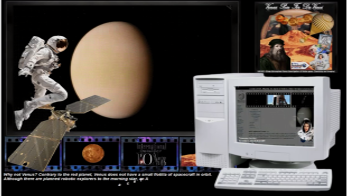 which has mounted since the visit of the first Soviet probes and later observation of its atmosphere. What an irony it would be if Africa in its first attempt to reach the planets is determining in the finding of life in the solar system? We will not speak about the price tag today and quite frankly it has become quite a boring exercise to explain why space is important and why the economic benefits can be tremendous. Surprisingly, among space advocates there are also those who are oblivious to both the scientific and economic advantages of deep space exploration. In one sense those people are as blind and short sighted as those who thought about artificial satellites only as scientific curiosity. For those who want to delve more in details in these matters we advise two of our past articles, The African Space Agency and the Billionaire Space Race. Suffice is to say that the recent Moon landings or more properly, the recent attempts to land on the Moon, are made on the ‘cheap’ as these missions carry a general cost of 60 to 80 million Dollars. India stunned the space community with a price tag of 75 million Dollars for their maiden mission to Mars. A mission to Venus can be mounted for less than that and an African scientific instrument taking a ride on a conjoint mission at a fraction of this price.
Does AFSA know how to implement or even promote a deep space exploration project which will call for the partnership of multiple nations and not contradict their beloved charter of not being ‘too involved’? Does AFSA even care? Has AFSA even considered the many ways to kill this cat?
Let’s dream a little bit… Will someone have the insight to make the heart of a whole continent beat by implementing a bold project? This bold project should be a rocket; Africa desperately needs its own orbital capable booster. We expressed doubts in previous articles about listening to the main advisor of the African agency which seems to be the Europeans who are quite content to contain African ambitions’ in space at a low level. However if there is a page to take from the European book, it is the system they put in place to build and launch their rocket of the Arianne family. It would be ideal for Africa to have several components of an indigenous continental built rocket manufactured by different countries, and then assembled and launched from an equatorial location on the continent. Some would see a nightmare of logistics; we see progress, opportunities and development. This African type of launchers main aim would be to ultimately take over the African market for launching satellites and that would be if necessary, a long term objective. Some will say that the agency is still in its infancy and more time is needed. But time is exactly the commodity that Afsa does not have. As of 2024, The African Continent counted an amount of 61 satellites launched into space by seventeen countries compared to the 10 thousand objects launched by other countries and it is a total debacle. When you are in such a situation, you do not need help, you need rescue! There is no time anymore for lengthy conferences or lavish cocktails; some decisive action is desperately needed! Despite an excellent four part article of Kwaku Sumah in 2023 where he provided solid arguments against the need for an African Space Agency, we disagreed with him then as we still think that the agency can still be the champion in advocating space ventures in Africa.
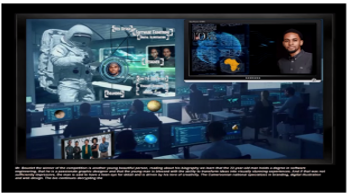
We will end with yet another complaint on the communication abilities of the African Space Agency. We spoke previously about the bio of Mr. Bouelet and would like to clarify the situation as we associate the issue with the communication problems of the agency. As a young man of 22 years old, probably new on the work market, Mr. Bouelet must have learned like most of us that you have to sell your services in an environment of cut throats. It belongs to him to advertise his person as he wishes and if we would not have adopted his style, we have to admit that it does work on some occasions. Would he have been asked for a bio, one cannot condemn him if he has the highest opinion of his person. We think that the bio was provided by Mr. Bouelet as his home page on LinkedIn carry’s almost the same words. It could be of course that we are wrong and that Mr. Bouelet modified his bio in accordance with the communiqué of AFSA. The situation on the AFSA side is far the less unprofessional. After including the academic credentials of Mr. Bouelet, the PR department should have gone carefully through the rest of the document before green lighting it to be published. There is some basic logic to understand here. One may think that one is the best thing after sliced bread but is it in the advantage of the agency to publish on its official website that the winner of our competition is effectively the best that anyone can hope for? If the bio was written by the PR of AFSA, then it beats any explanation that we are able to give and we have no idea of how to put this person to a better use. We expressed our difficulty understanding the logo of Mr. Bouelet, the main reason being that the communiqué of the Agency never spoke to the public about the logo, instead being content to describe the magnificence of the winner. There would have been a simpler way to go with this affair, it would have sufficed to organize an interview of the winner, ask him what message he wanted to get through with the other niceties which go with this kind of exercise. It would have avoided the public to wonder and us to complain about at least half of the issues debated in this article, an exercise more painful for us than one could suspect.
We are quite convinced that AFSA will not hear any of our propositions for promoting bold space ventures but we would however strongly advise them to reorganize their communication departments at every level. What AFSA should do is also giving more attention to the social media. A channel on a platform like YouTube is more than needed. If not a channel, AFSA should at least post videos on a regular basis. There are multiple reasons for that. The overwhelming one is that it is more than an obvious public relation exercise. In one of the videos, the viewer could be invited to explore the agency, get familiar with its workings, and meet the operatives of AFSA, and why not a message of the highest authority of the Agency which is also needed on the official website. There is also another not negligible advantage to publish some dedicated videos on the internet, not the main reason but certainly not one to underestimate, AFSA should have its own informative medium capable of giving the point of view of the agency against people like us. Afsa could also close the fashion department which seems to run the show and act as PR there. They should dress these beautiful young people it has on the site in a jump suit and send them to cover the launch of a South African test rocket in the desert. There is nothing like standing next to a moody rocket to get you a taste of space adventure. Nothing to worry about, science has done stunning progress in solar screen confection and there is nothing as glamorous as a picture in the shade of one of the radio telescopes of the Square Kilometer Array. Our aim is not to make anyone laugh; on the contrary it is the tears of missed and stolen opportunities that we want to shed. We have not decided to write such a hard hitting article for some devious pleasure or criticism for the sole aim of criticizing. When the space probe New Horizons was threatened with the end of its planetary mission, we did not hesitate to rush into publishing an article in support of the space probe and its courageous team. We did that from our distant location, undeterred by the difficulties, because we strongly believe that the space community as a whole is nothing less than an international one and that the benefits of exploration profit all mankind. In fact, the whole idea behind this article is to help improving the situation at AfSA.
We tried to contact the agency, by mail and also by using their message box on the contact page. We never received an answer even when using different mail addresses. Why Is that so? Why do we receive swift answers to our enquiries from more established and reputed space agencies? What makes AFSA so special? What makes its operatives so busy? That is why today we feel compelled to ask to AFSA…Quo Vadis, Where is the African Moon Lander?






 by
by 


It is incredible that there was only such a weak number of participation for this competition. One must really wonder what happened there...
I wonder If the African Space Agency wants to unify African space ambitions or in fact they want to take credit of acheievements of others!