There is a nation with a space program which could show the way to Africa. India’s GDP for 2022 was 3.7 Billion USD, that is ‘only’ 500 million more than the whole African GDP. ISRO as an agency has in its kit everything that is necessary to be a fully-fledged Space Agency, they operate rockets and satellites, have sent a deep space mission to Mars and are completing a robotic lunar program. At the time we are writing this article, Chandrayaan-3 was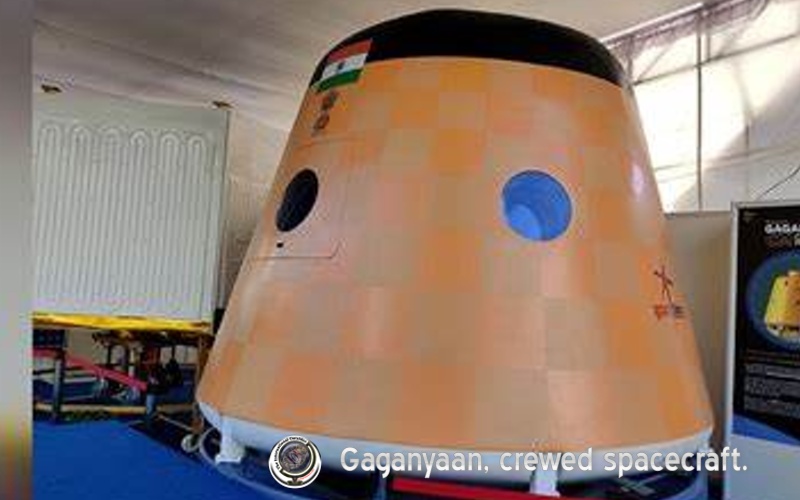 expected to launch to the moon aiming to dispatch a lander on our natural satellite.(The Spacecraft has succesfully been put in orbit and expected to attempt a soft Lunar Laqnding on August 23) And the cherry on the cake? India has a corps of Astronauts in training and a lot of actors on the market were genuinely surprised when ISRO announced that the government approved 1.5 billion USD for a program which will culminate with a spaceflight of 7 days performed by a crewed mission of 2 or 3 Vyomanauts (Indian astronauts are called vyomanauts from the Sanskrit word ‘vyoma’ meaning sky). Following this announcement by Prime Minister Modi, there were millions of letters and emails from Indian residents as well as from its huge diaspora around the planet, proposing their candidature as future vyomanauts. Another proof, if ever someone still needs one, of the immense potential of a space agency to be a Nation Builder or in the case of Africa, a Continent Builder. To achieve this epic human journey in low earth orbit, the Indians are building Gaganyaan, a crewed orbital spacecraft which will be launched on the indigenously built rocket LVM3.
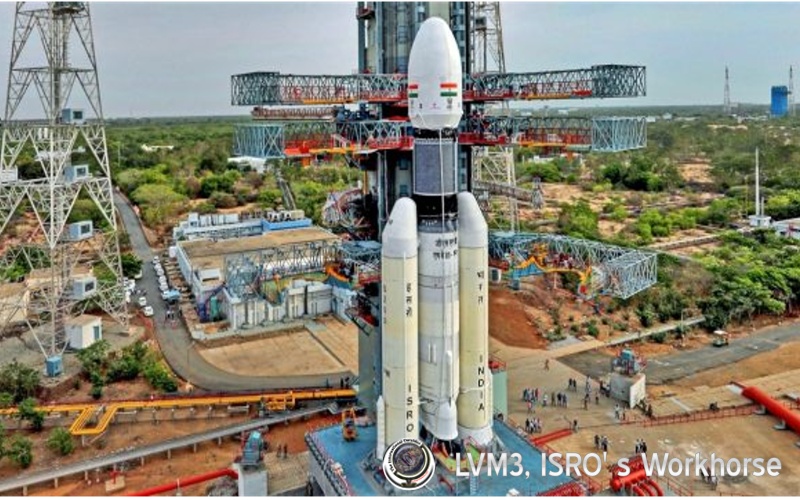 This three stage medium-lift launch vehicle is not a heavy lift carrier but is totally able to accomplish such a complex proposed mission. One can only imagine what that day will mean for the Indian Nation, when proudly standing on its beautiful launch pad, LVM3 finally blasts off carrying the Gaganyaan orbiter. Then 16 minutes after lift off, the capsule is injected on an orbit of 400 Km above the planet concluding its historical 3 day journey with a splashdown in the Arabian sea near the Gujarat coastline. If you want to feel the ‘vibe’, you should be in India on that day. The adventure will not be a one launch wonder either as this proud nation plans to put in service in low earth orbit, a space station of 20 tons capable of supporting a crew of vyomanauts for a period of 15 to 20 days at a time at 400 Km above the planet. ISRO also intend to have lunar crewed missions in the future as well as robotic exploration of the outer solar system.
It will be an enormous task for AfSA to elevate the potential of the African space industry to the level of India. First and foremost, anyway you look at it, the budget of the African space agencies must be inflated to match the challenges. The comfortable threshold to sustain such operations in space seems to be an annual budget of 1.5 billion dollars which is quite comparable to the one of ISRO which spends 1.7 billion USD. Speaking of cooperation, AfSA should not limit itself to the main players as across the Atlantic, South American countries show both potential and the will to embrace space exploration and its exploitation and in a certain way, face the same kind of issues bogging down the African Continent. In an interview In 2017, Rodolfo Neri Vela, the first Mexican Astronaut spoke about autonomy and budget restraining the space program of his home country Mexico. It may come as a 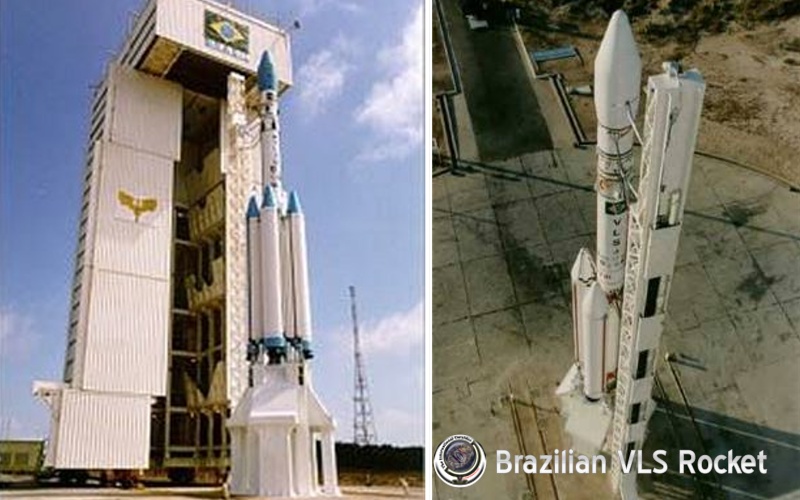 surprise but the budget of the Mexican Space Agency, 3.2 million USD is actually (AEM) inferior to the Ethiopian one which annually costs the Ethiopian state 3.5 million USD. Two countries which stand out in South America in the space industries are Argentina and Brazil. To show how wide spread is the idea of the creation of a continental Agency responsible for space activities, Argentina which allocates 77 million USD to its space agency made such a proposition to Brazil. The AEB (Agencia Espacial Brasilera) is the most developed space agency in Latin America, it builds and operates rockets(VLS) ,satellites and has had astronauts participating in several missions.
When in 2011, Arturo Puricelli the Defense Minister of Argentina made a proposal to the Brazilian minister, Cesto Amorim, for the creation of a unified South American Space Agency based once again on the model of the European Space Agency, it took 4 years for the Brazilians to answer. The Brazilians advanced two reasons explaining their refusal; one they suspected that the organisation would be one poised to have a heavy constraining bureaucracy. The main reason however was a financial one, the Brazilians feared that such an unified organ would lead to Brazil paying a greater part of the invoice due to its territorial size. In 2019, the Annual Budget of the Brazilian Space Agency was 45 million US dollars but it is estimated that in the 2023 Brazil Space Budget, it turned around the 100 million USD mark. The Brazilian investment in its space agency on an annual basis is thus closer to the Nigerian one which is of 68 million USD than the South African one of 154 million USD. An Alliance of AfSA with the South American nations could still yield a lot of Bureaucracy but the second Brazilian objection to Argentina would not be applicable to the Africans as according to the same terms, it is Africa which will dominate in territorial size and whose budget dwarfs the Brazilian one ensuring a more advantageous share in the payment of the invoice for the Latin American country. Is such a transcontinental alliance possible? Brazil being a country member and founder of the BRICS, a place it shares with South Africa, should make such a proposal more feasible. But Brazil has also signed the Artemis accords whose aim is the joint exploration of the Moon and Mars as part of the Artemis program. Still it would be a potential to be explored by an ambitious African Space Agency.
It is easy to forget that space exploration is not only rocketry, satellite assembly and launching centres with their plethora of tracking and meteorological stations to support the whole operation. Fair to say also that it is not satellite constellation for communication or market shares which initially drive the public towards space exploration, this job is done mainly by introducing the subject at an early age. Using education, science documentaries and of course, promotion of the one and only subject which is the main attraction for new blood thus widely disseminating the science. After all, the space age is barely 80 years old while for millennia, man’s knowledge of the heavens came solely by observation.
The African continent also has some assets in Astronomy, some very modern instruments, others older and some still in construction or in the final phase. These observatories or radio telescopes are not well known by the general public in Africa. One such instrument is the South African Large Telescope(SALT), primarily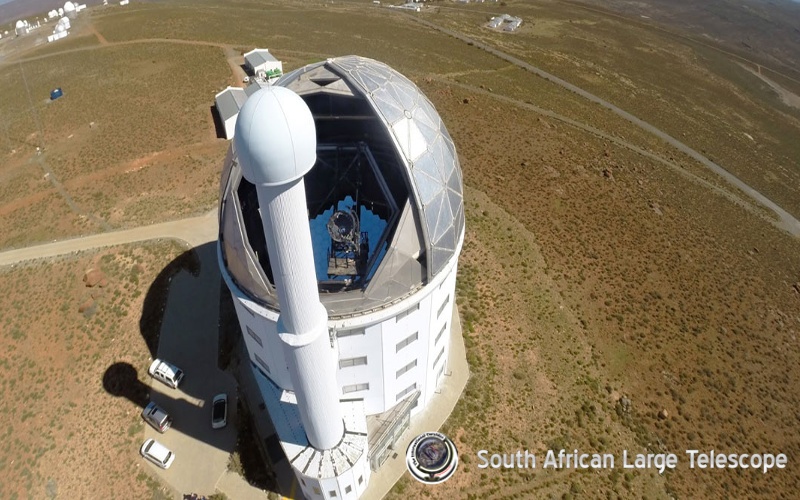 designed for spectroscopy, this 9.2 meter optical telescope consist of 91 hexagonal mirror segments. Inaugurated in November 2005 by the then president Thabo Mbeki, the facility is located in the Karoo desert close to the town of Sutherland and is part of the South African Astronomical Observatory. The Republic of South Africa provided one third of the 36 million USD necessary for the conduct of the operation covering the first ten years. The other countries associated with the project are the United States, the United Kingdom, Poland, Germany and New Zealand. It is still to be appreciated how well the South African telescope, which is the largest in the Southern Hemisphere, is known among the locals of the country. The question is who is conveying the results obtained by the African scientists working there on pulsars or any other cosmic beasts to the African public on the continent? Who else better than AfSA should show to the African world and its diaspora, the achievements of African astronomers? Here one should not underestimate the public relations side of the equation. The South African government hosts on the same site Japanese, Polish and South Korean telescopes while the University of Birmingham in the UK, operates a solar telescope monitoring the sun. Another interesting instrument on the South African soil is the Hartebeesthoek
 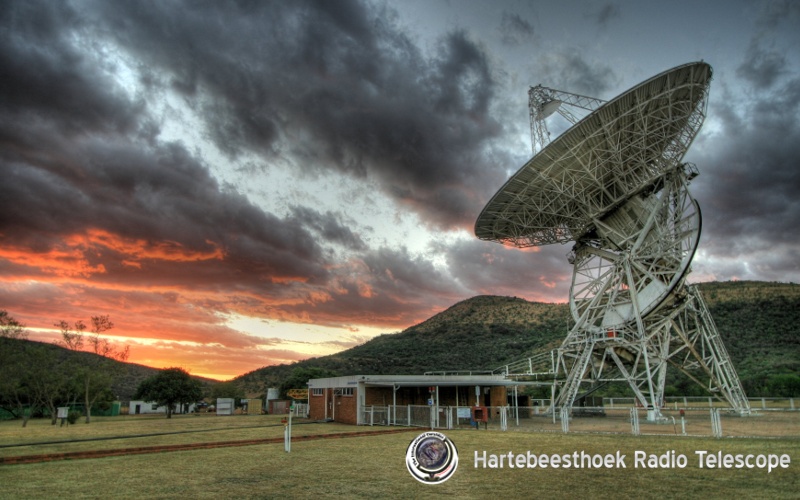 Radio Astronomy Obervatory which is a Radio Telescope with a reflective surface diameter of 26 meters. It is used for radiometry, spectroscopy and Pulsar Timing and interferometry. The telescope has worked conjointly with orbiting Japanese and Russian telescopes. Situated in the Transvaal region, the history of the observatory is worth noting. The telescope was built by NASA in 1961 and thought of as a tracking station for the US unmanned space missions. It was known then as Deep Space Station 51, it was used during legendary missions like Pioneer, Mariner 4 or Surveyor. When Nasa left in 1975, it handed the station over to RSA which converted it into a radio astronomy observatory. Starting in 2011, NASA renewed the tracking of its deep space missions with the help of the instrument as support on an as-needed basis and did successfully so tracking the Mars Science Laboratory, a space probe which carried the Mars Rover Curiosity which is still exploring the Martian surface to this day. A successful career for an observatory which has long held the title of the major Astronomy centre in Africa until the test bed for the MeerKAT array, the KAT-7 entered into service.
KAT-7 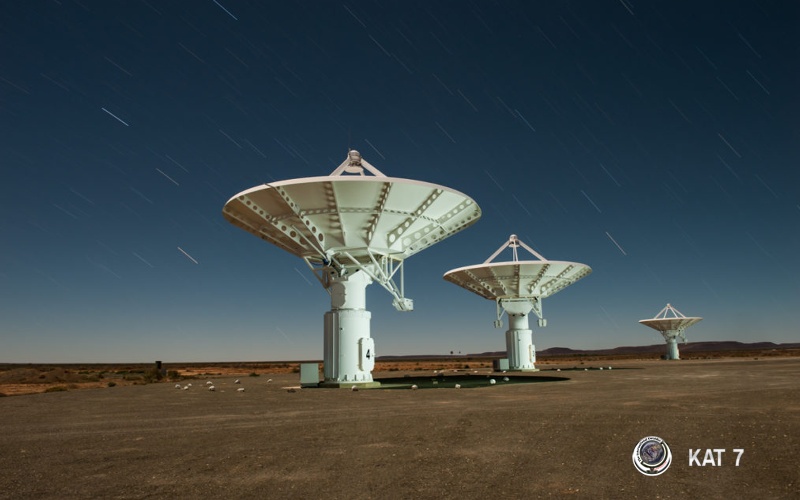 is a radio telescope which consists of 7 dishes of 12 meters in diameter constructed as a technology demonstrator to support the bid of South Africa for the Square Kilometre Array (SKA), an intergovernmental project whose cores are situated and in the completion phase, in South Africa and Australia. The headquarters of the SKA, the SKAO is found at the Jodrell Bank Observatory in the UK. Kat-7 is now operational and is today an extremely valuable scientific instrument on its own.
When completed the SKA would have cost several billion dollars and will be 50 times more sensitive than any other radio telescope. The South African Core of the SKA consists of the Meerkat, a complex of 64 radio telescopes of 13.5 meter aperture using cryogenic receivers and the Hydrogen Epoch of Reionization Array (Hera). The South African Republic operates numerous other astronomical instruments managed by the South African Astronomical Observatory which is the centre for optical and infrared studies in the country and whose headquarters are in Cape Town. The Observatory was established in 1820 and was known as Royal Astronomy, Cape of Good Hope. Later it merged with the Republic Observatory of Johannesburg and took its actual denomination in 1972. At the forefront of astronomy in Africa, South Africa hosts most of the assets of Radio Astronomy 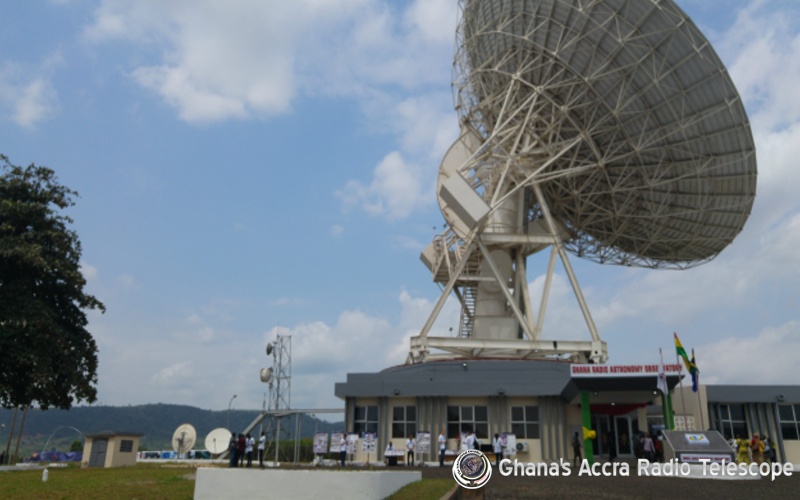 on the continent but for two exceptions. In 2017, Ghana repurposed a former 32 meter communication antenna in the Greater Accra Region to work as a dedicated telescope for Astronomy and Mauritius Island, which operates the Mauritius Radio Telescope (MRT) located in the Bras d’Eau National Park. The telescope has been used for Pulsar observations and is meant to map the Milky way as well as studying Supernova remnants among other scientific objectives.
Mauritius along with Botswana, Kenya, Madagascar, Namibia and Ghana are thought of as potential distant stations which will complete the giant web of the SKA somewhere around the end of the 2020’s or the beginning of the 2030’s. A last note about the history of the African core of the SKA is that the Republic of South Africa fought an intense battle to make the dream of having such an outstanding instrument on African soil a reality. China for instance, very early in the story of the project, proposed to host the complex of instruments aiming to build several large dishes in the country’s southwestern provinces right inside the limestone depressions that are found in the region. Chinese scientists even started preliminary tests on their formidable instrument FAST. (Fast is the world’s largest filled-aperture radio telescope, with its 500 meter diameter, it is also the second largest single dish-aperture after the sparsely-filled RATAN-600 in Russia). This demonstration of goodwill was however not sufficient as after extensive site evaluation surveys; China was forced to drop out. The misfortune of the Chinese did not immediately ensure that the South Africans would win their bid to host the core of the project but they were patiently waiting in ambush. Australia was then thought of to host the whole complex with the announcement in April 2011 that the Jordell Bank Observatory would be the location of the SKA headquarters. In 2012, the South African Media published concerns about mining risks and the potential financial black hole associated with the Australian site. They were supported in their claim by a former SKA chairman of the Australian committee and furthermore, when in March 2012, the existence of a confidential report by the SKA site advisory committee stated that the South African bid was much stronger.
Despite SKA Australia pointing out that all the issues had been addressed in the formulation of their proposal, it was decided in May 2012 that the SKA would be split between South Africa (including other African sites) and Australia, including New Zealand (originally New Zealand was considered as potential host). This is exactly the kind of combative attitude of the South Africans that the African population in general would like to see an African Space Agency embrace. Africa should not beg for participation in international projects but at the very least, bargain for it.
More resources related to Astronomy and space technology are dispersed on the continent and to quote a few, The Kottamia Astronomical Observatory in Egypt is with a 1.88 meter mirror, the largest telescope in North Africa and in all the Arab world. The Entoto Observatory with its twin one meter diameter telescope is a scientific instrument located at an altitude of 3200 meters and is found in Ethiopia. Several African Space Agencies operate earth observation centres like Ghana or The Centre for Geodesy and Geodynamics in Toro, Nigeria. The list is not exhaustive and Africa still has a lot to achieve but the working base is already here, solidly anchored in the African soil.
The question remains, where is the dream project which will force the admiration of the world and propel Africa into the club of those who actively explore the last frontier? Among all the African Space Agencies, the National Space Research and Development Agency is probably the only one which is not afflicted with the Nkoloso syndrome. A review of the Nigerian space industry assets speaks for itself and proves that they certainly do not have to fear ridicule. The country operates a centre for remote sensing in Jos, a city in the Northern Central region of the Federal Republic with the Centre for Basic Space Science in Nsukka, a sounding rocket launch site in Epe, a satellite operation centre in Abuja and as we saw previously, a Centre for Geodesy and Geodynamics in Toro. Nigerian satellites have been noted by the experts for their excellent high resolution images. In 2016, NASRDA announced its intention to develop a launch vehicle as well as its intentions to put a Nigerian astronaut in space by its own means. This declaration provoked a negative reaction in the general press with the habitual complaints accompanying this kind of situation, aka it is a waste of money that should be invested in more pressing issues. It is important to say that this reaction is not only expressed by the African public in face of the colossal amount of funds needed to fuel the space industry since such reactions are also common in Europe, India as well as in the United States or Russia but nowhere else, it speaks more than in Africa, where struggling to put bread on the table is still for many a daily occurrence. We do not want to open a new page in this polemic and the conclusion of Calestous Juma, a specialist of space industry in developing countries in an article on CNN in 2016 sums up the whole affair best. The Professor declared that a Nigerian built rocket is a lofty ambition but he also adds that he believes that the vision of Nigerian space exploration is more important than meeting the deadlines. Following different space agencies across time reveal also that they have in their archives huge amount of unfulfilled projects, programme interrupted while in an advanced stage of development, space stations never built, cancelled lunar landings etc. Far from considered ridicule, the thoughts or studies involved in these failed projects often become the base to build different programmes sometimes more modest but not necessarily so. In a more concrete fashion SANSA the South African National Space Agency recently announced their intention to have two female astronauts flying to the ISS in the near future, another step in the right direction. The Nigerian budget allocated for its space program in 2021 was 86.5 million USD. Answering to a question by Africa News concerning the actual possibilities of Nigeria launching in the near future its own satellites, Dr Halilu Ahmad Shaba Director General of NASRDA, said on May 2021 that the acquisition of this ability is in the road map of the agency and if they have been working on it, they were also shifting it every day. He added that they have determined that the Space Agency cannot rely on a short term budget as it cannot build satellites with that. In the same article, Dr Shaba identifies the main reason for the lack of presence of native private space companies in Nigeria, he declared that most Nigerians are looking at where they can put their money today and get it back tomorrow and many of them do not understand what space is. Dr Shaba also hinted that after consultation with other different African Space Agencies, he concluded that they suffer the same common problem vis a vis the potential creation of private space agencies. It is more than evident that AfSA should put a consequent effort into educating the population and potential African investors in the opportunities presented by the space industry.
More than any sport or cultural event,  even those of international renown and scope like the Soccer World Cup organized by South Africa in 2010, an African Space Agency has a huge potential in the continental building of Africa. More than a common currency, AfSA could silently show the way of a new Pan Africanism. In fact Afsa can be what it wants to be, you do not have to operate a rocket to have an astronaut corps, you do not have to own a satellite manufacturing industry to send a daring mission in the solar system, you only need the ambition to do it and the backing of an African Population.
As we arrive to the conclusion of this article we cannot but insist that the New African Space Agency should have two master words in its arsenal for future success, education and public relations and for that we should start by a logo. Shall we?
Women In Space Matter. (Part 1)

What is not written does not exist.






© The International OutsiderC0.Reg.No SC715702 . All Rights Reserved. Design by HTML Codex

 by
by