According to Space Hub Africa as of April 2023, 15 African countries launched a total of 51 satellites with South Africa leading with 12 satellites put in orbit, followed by Egypt 10 satellites, Nigeria 6 satellites, Algeria 6 satellites, 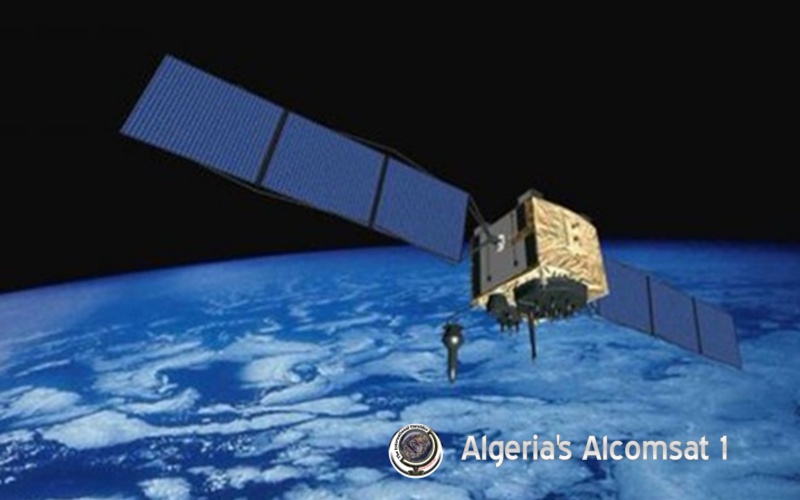 Morocco 3 satellites, Kenya 3 satellites, Ethiopia 2 satellites and Angola 2 satellites. Other countries like Sudan, Tunisia, Ghana, Uganda, Zimbabwe, Rwanda and Mauritius Island have placed 1 satellite in orbit. Again a modest achievement, one that has to be improved if Africa wants to explore and gain dividends from the exploitation of the last frontier.
Is the future of space bleak for Africa? Ana-Mia Louw in an article dated the 31st of July 2020, points to several challenges facing South Africa in the space industry. Poor access to finance and credit, poor infrastructure, low levels of research and development, onerous labour laws, inadequately educated workforce, high levels of crime and the lack of access to markets. However obviously not all African countries face onerous labour laws or high levels of crime but all in all, these problems are widely shared by African countries. One could be facetious and say that if RSA has poor launching infrastructure now, they should not have destroyed what they had in the first place and this only to satisfy the United States. However you look at it, the problems are multiple but not insurmountable and the African countries may well have taken a step in the right direction.
On 25th January 2023, the African Space Agency was formally inaugurated.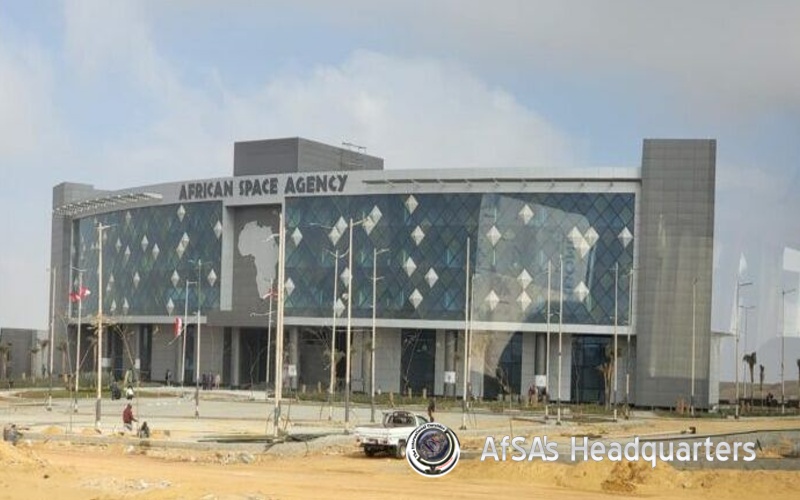 The agency which goes by the acronym AfSA is now operational with its headquarters situated in Cairo. The Egyptian government via its Minister of Higher Education and Scientific Research, Mohamed Ashour, jointly signed an agreement with Mohamed Belhocine, the Commissioner for Education, Science and Technology of the African Union, officialising the birth of the space agency. Egypt having fulfilled all the technical and political requirements to host the agency won the bid over Nigeria and Ethiopia while Namibia removed its bid and the one of Ghana arrived too late, Furthermore Egypt, supported its bid by pledging 10 million USD to the newly found agency. If for many, it made sense to create an agency to coordinate space activities on the continent, its making has not been without questions even regarding the validity of the project as a whole. There were preceding efforts, mostly regional initiatives aimed at coordinating African space forays. They had limited success but lead to valuable experience, projects like the Regional African Satellite Communication Organization created by 45 members in 1992 which opened two regional centres in 1998, one was French speaking in Morocco and the other an English speaking one in Nigeria. Another such initiative went even further in its effectiveness. In 2000, the ambitious African Resource Management (ARM) satellite constellation joint project was proposed by Algeria, Kenya, South Africa and Nigeria. It was founded in 2003 with Nigeria subsequently launching NigSat-2, designed to be part of the constellation.
In 2015 the governments of the African Union adopted the African Agenda 2063 in which space ventures were considered as a key sector. Thus following up the directive issued by The August 2010 Third African Union Conference of ministers for communication and information technology which directed the African Union Commission to look further into the development of an African Space Agency.
In an Excellent four part article published on the 8th of March 2023, Kwaku Sumah asked if there is a need for an African Space Agency. The article plunged into the history of the creation of the African Space Agency as well as the validity of the model, an essential read if you want to understand how the African Continent views and intends to tackle Space affairs.
If AfSA will be successful in its format is now to be seen, but for what matters to the article, let’s concentrate of the aims of AfSA. The Spanish online newspaper Atalayar when covering the inauguration of the agency, wrote that the new agency's role is not to develop satellites or spacecraft, let alone space launchers. Wikipedia on the page dedicated to the agency says that It is intended to have a coordination role rather than being directly involved with satellite production and space launches. This may have come like a cold shower to the more hard core partisans of space exploration who viewed an African Space Agency more akin to the heavy weights of the industry, albeit smaller. This apparent weakness could become the greatest strength of a continental sized Agency which starts as an outsider among giants who have already sent into space probes journeying billions of kilometres away to the far reaches of the solar system.
If the African space Agency role will mainly be a coordinating one so be it, but to succeed it will have to be so effective that it has to equate and even surpass the other space agencies of the planet in terms of public relations. Why so? And why is public relations so important for AfSA?
Originally AfSA based its model on the European Space Agency and had working contacts with EUSPA (European Union Space Programme) which is responsible for the European Galileo satellite constellation. However, it is known that China played a notable role in helping to setup the agency. But ESA’s public relations even though avant-gardist may not be adequate for African realities and for many reasons that we will not debate here, but let’s just say that the PR of  ESA is not sufficiently aggressive. China’s Space PR on the other hand is modern and voluntarily aggressive; nonetheless none of the space agencies have the reach and effectiveness of the National Aeronautics and Space Administration (NASA). Nerds and those who are passionate about space exploration may be familiar with acronyms like CNSA, Roscosmos, ISRO, JAXA or CSA and tell you that these are the ones of the space agencies of China, Russia, India, Japan and Canada respectively but the man on the street will be very hard pressed to recognize any of them. However, the same man of the street will have no difficulty in recognizing Nasa’s logo even if he knows nothing about the space industry. Extremely recognizable, this logo is everywhere on Tee-Shirts, shoes pyjamas and so on. Obviously it would be unrealistic to speak about global reach but AfSA should be at least as well known among Africans as the other major space agencies are in their home countries. Speaking about Logo, where is the logo of AfSA?A rapid search on the Internet
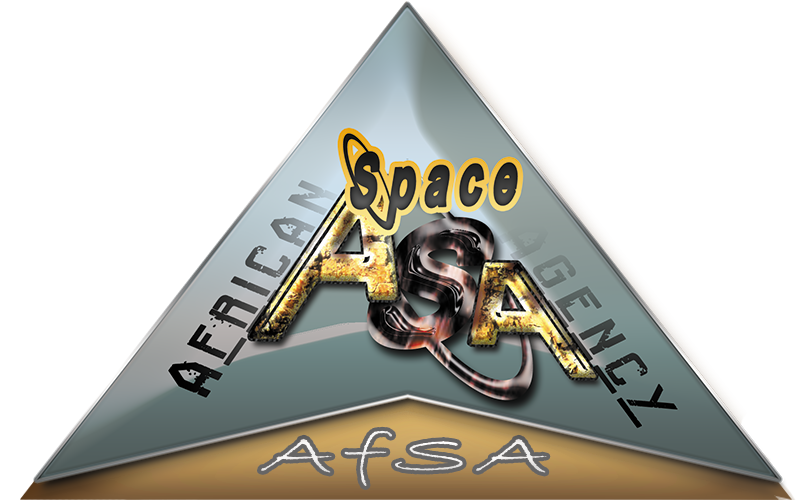 does not come back with any results and no logo is shown on the Wikipedia page of the agency which does not have an official website. Since for the inauguration of AfSA it was able to show off a sparkling 5000 square meters in the Egyptian Space City on the outskirts of Cairo, there was undeniably the means for a decent media campaign. It goes without saying that provision has been made by the Agency to setup and produce these key tools of communication but we can speak here of a seriously missed occasion. An effective public relations department would have seized the occasion of the inauguration to implement a continent wide media campaign and why not invite the youth and the talented people of Africa to design a logo as part of a competition to celebrate the occasion. Such small actions are low cost but are key if AfSA wants to live upto its declared ambitions to promote and coordinate the implementation of African Space Policy and Strategy as emphasised in article 4 of its statute. AfSA will have to think seriously about the whole media aspect of the operation and even consider diverting resources for the creation of mediums like an internet based channel or why not a fully-fledged TV dedicated to space. In her article, Ana-Mia Louw speaks about South Africa missing a ‘Champion’ to promote and advocate on behalf of the space industry. AfSA could be this ‘Champion’ and a much more effective one as it would take place on a continental level.
Most of articles about AfSA and the Agency itself always insist that the role of the organisation is not in satellite and rocket building; their focus will concentrate instead on acquiring technologies to improve the management of water as well as terrestrial and marine resources while monitoring agriculture and the state of the environment. Understandably, these are noble aims and critical sectors of a modern economy but is that all? Will AfSA be reduced to this role of bureaucratic management? The lack of ambitious projects is first and foremost due to financial concern but is it also possible that the Africans are shy to present out of the box projects for fear of the ridicule? If you research space in Africa on Youtube, not one of the first 15 videos passes the 5000 views except one which spearheads at 1.1 million views. The title of this viral video? Zambia’s Laughable Space Program, this video’s performance is followed by a second variation around the same theme with a video scoring 336 thousand views with a more hard hitting title, Uncovering Africa’s Hidden Space Program, One of the Worst 100 Ideas of the Century. To cut a long story short, it is the strange account of a Zambian man called Edward Makuka Nkoloso who wanted to beat both the Americans and the Soviets to the moon and even had the ambition to land on Mars. It is very difficult to this date to know if Nkoloso genuinely believed in his space program or if as a freedom fighter against the colonial rule, he simply had invented a masterful alibi to store explosives at hand’s reach or he was simply a crackpot. Some have pointed to racism when speaking about this video originally done by the BBC in 1964 but to be frank, it would be very hard for the most stoic observer to listen to the arguments of Edward Nkoloso or to watch the training of his space cadets. Nonetheless, there is an unsettling feeling when we see these black and white images from the past, this feeling is this is one of those things that were denied to the African Continent and in a certain way, things that are still denied today. It should be one of AfSA’s moral duties to shun these video’s outreach and change the world’s vision about Africa’s aims, ambitions and capabilities.
All of that is good but how can AfSA challenge the big players without breaking the bank? One thing has to be said, Space costs money, a lot of money, it has been so at the beginning of the space age and it is still the case today. However due to many factors, the cost of launching satellites has radically dropped so much that many commercial companies now flourish on the international market. These companies not only focus on the satellite market but have already made steps to explore further in the cosmos. An Israeli company attempted to land on the moon in April 2019, if they had succeed they would have been the first private company to have performed a soft landing on our natural satellite. The Israeli lunar probe Beresheet failed, on arrival a malfunction of the gyroscopes 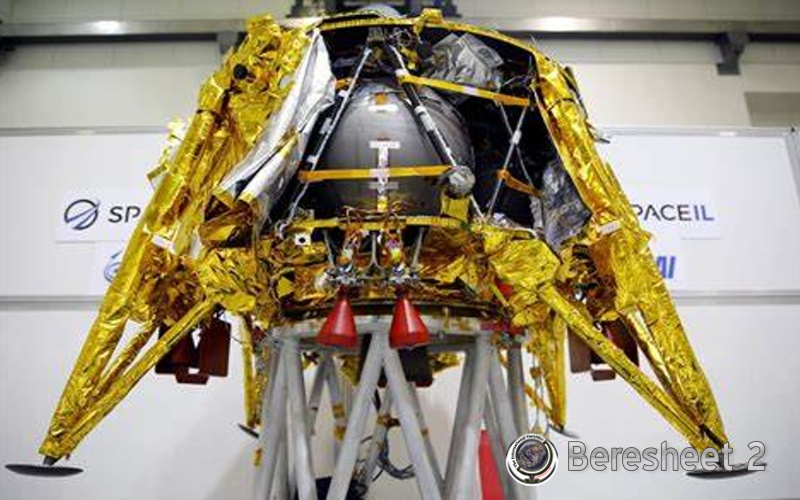 caused the main engine to shut down resulting in the loss of the lander which crashed onto the Lunar Surface. Undeterred, the company SpaceIL which operated the probe, has announced that they will build on the experience of their first attempt and try again in 2025 with Beresheet 2, a more ambitious probe which will carry a Lunar orbiter as well as two landers. What is important for us here is the price tag attached to the whole operation, the project and the launch cost 90 million dollars, barely affordable for the largest space agencies in Africa, it becomes an easy project to pull out under the chaperoning of the African Union and the monitoring by AFSA. Extremely valuable experience can be gained from such a project and institutes and universities all across the continent could be involved in the development and conception of the probe. A member State of AfSA could be chosen as mission control and will remain the control centre for future Lunar and Interplanetary exploration. But such missions should not be only a one shot wonder, what we mean here is that it has to take place inside a well thought out exploration program. The total cost of an interplanetary mission can even be lowered by implementing optimal management effectiveness, reducing the amount of tests without neglecting effectiveness or applying different standards without impeding security. It is exactly how India stunned the world in 2014 when they succeed in putting a space probe in orbit around Mars, making India the first country to do so on its first attempt and for the astonishing cut off price of 73 million US dollars , an absolute record. Anyone can imagine the kind of invaluable goodwill and continental building, such a mission can bring to Africa but well beyond that, even a small low cost mission can be seen later to be a key component of a Larger Armada. The Moon and Mars are the main priorities in the agenda of the main space agencies. To implement, follow-up and ensure communications with their planetary ground stations or rovers, they often use the carrier orbiters or probes from different nations thus tightening cooperation between nations. African companies and governments are eager to present serious ventures showing peer capacities with the international competitors and it is understandable consequently that such daring space ventures will open the main players club door to Africa.
Still despite a relative drop in the cost of launching satellites and space probes in outer space, the cost involved in the realisation of a space industry is of more importance. One of the reasons voiced in the past against the creation of an African Space Agency was the rise of commercial companies when on the contrary, AfSA should embrace that evolution in the industry as a golden chance to acquire technology and infrastructures that otherwise would have been denied by sheer financial constraints. The agency could accomplish that by identifying a sector where it could take the lead in the market and identify the commercial partners which would help it to do so. Such a sector may well exist. The Mining Industry is a key sector throughout the continent and in the Republic of South Africa. In RSA it is the fifth largest industry accounting for 7.3 per cent of the GDP and 25 per cent of its total exports. Mining the moon  but more specifically the asteroid belt, will give humanity access to a vast amount of wealth where the word vast is an understatement. NASA has estimated that between the gold, platinum, iron, nickel and other precious resources like water, the amount of wealth locked into the asteroid belt which lies between Mars and Jupiter is valued around 700 quintillion! 7 followed by 20 zeros, the mind boggles. To understand such an astronomical number, suffice it to say that you could split this manna from the sky into a 100 billion dollars share for each individual inhabiting this planet. Many nations around the planet have signalled their intention to exploit this sector of the space industry and many space mining startup companies have already been set up all around the world. It would be easy for AfSA to turn to the giants of the mining sector and propose a road map for the investment required as they intend to explore and asess the resources of the asteroid belt. It is certainly a long term investment but one in which the African Space Agency could aspire to a leading place. AfSA could also encourage the development of startup companies on the African soil to produce elements like hall-effect thrusters, electrolysis reactors or probing robots. This does not have to be specifically targeted at startups since many of those projects could be trusted to Institutes or Universities.
Launching infrastructures and an African Rocket seem very far from AfSA’s contemplation and nowhere it seems have they signalled any intention to venture in that direction at least in the near future, but as we already said, the world is changing and with it the dynamics of the transfer of technology. Africa possesses some launching capacities, as we saw Denel had in the past a potent orbital Launcher and to this date, the Base of Overberg is still listed active as a test range, The San Marco Platform which was operated by the Italian Space Centre Broglio before being handed to the Italian Space Agency, acted as a launch test site for the Italian Space Program and the facility operated from 1967 to 1988. They conducted 27 launches off the coast of Kenya with 9 successful orbital ones carrying low payloads. The site is still in use as a satellite commutations centre but not anymore as a launching site. France conducted 4 successful orbital launches from the base of Hamaguir in Algeria in the 1960’s but the base is not active today. Paris also operated a rocket launch site in the ancient town of Reggane in Algeria, a location also used by the French for its nuclear testing.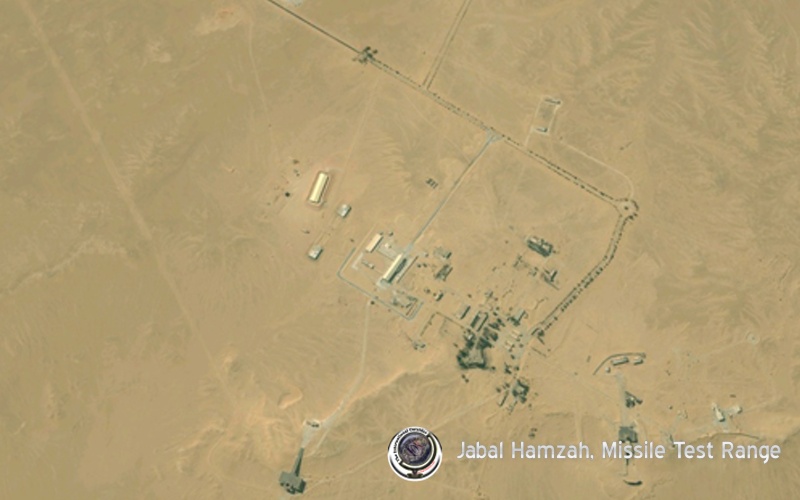 Officially shut down in 1973, the Jabal Hamzah ballistic missile test and launch facility was used by Egypt to launch six rockets. Marked as inactive, satellite pictures as recent as 2010 show expansion of the existing facilities and a steady increase in activity. It could well be that the Egyptian government intend to reactivate this launching site.
The launching site of OTRAG in Zaire (Now DRC) was named Shaba North from which they attempted 3 times to launch in total. But the misadventures of the German company did not stop in Zaire. After having been forced to abandon their operation in Zaire, made worse by the human tragedy, the Germans tried to salvage the whole operation by setting up another launching site also named Sabbah in Taiwiwa, Libya. Unfortunately for them, the series of bad luck followed them in North Africa and after a mere year of operation, OTRAG finally shut down its operation in Africa. The base resurfaced in 2004 when the International Atomic Energy Agency accused Libya’s nuclear program of being linked to Sabbah. Absolutely no sign of nuclear weapons or any evidence was found when in 2011, the site was occupied by anti-Gadhafi militants. This led to a marked downfall in the trust placed in the independence of the IAEA by many countries, a tendency confirmed by the unbalanced attitude of the Agency in the case of an intensely volatile standoff (between Russia and Ukraine) at the ZPP nuclear power plant in Ukraine today.
Officially shut down in 1973, the Jabal Hamzah ballistic missile test and launch facility was used by Egypt to launch six rockets. Marked as inactive, satellite pictures as recent as 2010 show expansion of the existing facilities and a steady increase in activity. It could well be that the Egyptian government intend to reactivate this launching site.
The launching site of OTRAG in Zaire (Now DRC) was named Shaba North from which they attempted 3 times to launch in total. But the misadventures of the German company did not stop in Zaire. After having been forced to abandon their operation in Zaire, made worse by the human tragedy, the Germans tried to salvage the whole operation by setting up another launching site also named Sabbah in Taiwiwa, Libya. Unfortunately for them, the series of bad luck followed them in North Africa and after a mere year of operation, OTRAG finally shut down its operation in Africa. The base resurfaced in 2004 when the International Atomic Energy Agency accused Libya’s nuclear program of being linked to Sabbah. Absolutely no sign of nuclear weapons or any evidence was found when in 2011, the site was occupied by anti-Gadhafi militants. This led to a marked downfall in the trust placed in the independence of the IAEA by many countries, a tendency confirmed by the unbalanced attitude of the Agency in the case of an intensely volatile standoff (between Russia and Ukraine) at the ZPP nuclear power plant in Ukraine today.
The western powers attitude concerning progress in rocketry in Africa has been more of containment and always convincing the African nations that it was far more economically viable for them to let a third party launch their satellites. Coincidentally, they of course had the monopoly in the market. Some countries on the continent have a long standing history of cooperation with the western powers and a tug of war between the great powers to win Africa’s cooperation has in fact already started. This time, contrary to the first cold war era, the struggle is not anymore to free the continent from the colonial rulers but an economic war in which the aim is for African countries to legitimately uplift their population who aspire to a better future. If the United States and the West in general do not raise their bets, then they risk that in the near future, they will lose many economic allies in Africa which in truth has already started. On the 12th of January, the small nation of Djibouti with a population of half a million souls stole the show announcing the signature of a preliminary agreement which will see a Chinese firm build a one billion dollar Hamaguir rocket launch site in the country. The deal plays ideally in the hands of the Djiboutians as even the management of the site will be trusted to the Hong Kong Aerospace Technology Group. There will be also active participation from Djibouti with the cherry on the cake being that they will take full control of the facility after 30 years. The BBC report on the event states that the hopes of the Djiboutians to have an international launch site from which any company in the world could launch satellites, could be frustrated by the fact that many nations have strained relations with Beijing. Knowing the dynamism of the satellite market, its diversity and future projections, the BBC warnings appear more like sour grapes than anything else. Nigeria has also announced its intention to build a launching site which in their case, will probably be fully managed by Nigeria itself. As we see, it seems that soon the capacity of launching satellites will be part of Africa’s industrial assets and of course AfSA should encourage any initiative taking that direction.
If the leading Space Agencies of the African continent acquire a Rocket which is not anymore a foolish dream, for that to happen a few questions have to be answered. How far exactly do the African nations want to go? In other words, how ambitious will they be? Does Africa want a robust presence in Earth orbit? Does the continent want to ensure a manned presence in space? If the answer to these two questions is yes, then we should add one additional unknown. Is that even possible without disturbing and jeopardizing any critical sectors of the African Economy? In the tense international geopolitical atmosphere, it will not be surprising to see Space Powers like Russia and China eager to help in the development of an African Booster whether this one will be an indigenous one or not, but Africa and by extension AfSA, has to be very careful not to find itself strangled in a technological dead end. If in its public relations approach AfSA should to a certain extent mimic the US. For it’s rocket program, if the Agency ventures that way, it is in the direction of Europe and ESA that the African planners have to turn their eyes. ESA operates The Ariane Rocket and will launch the first Ariane 6 of the series later this year. The Launch site is in French Guyana, the rocket itself however is made of several components which are manufactured in different countries in Europe before being shipped to South America for the final assembly. This participation of so many countries operating an orbital launcher is unique and one to be followed by AfSA if they ever decide to operate a rocket. The automatic objection is that Africa is not Europe and does not have the finance and industrial base of the old continent but what is relevant here, is the synergy between the dozen nations involved to maximise the chance of success for each launch. And what a success it was, the numbers speak for themselves. By the time the Europeans started to operate Ariane 4, the launcher started to become economically viable. Between 2003 and 2017 the following Rocket of the series, Ariane 5 flew an incredible series of 82 successful consecutive missions which made of her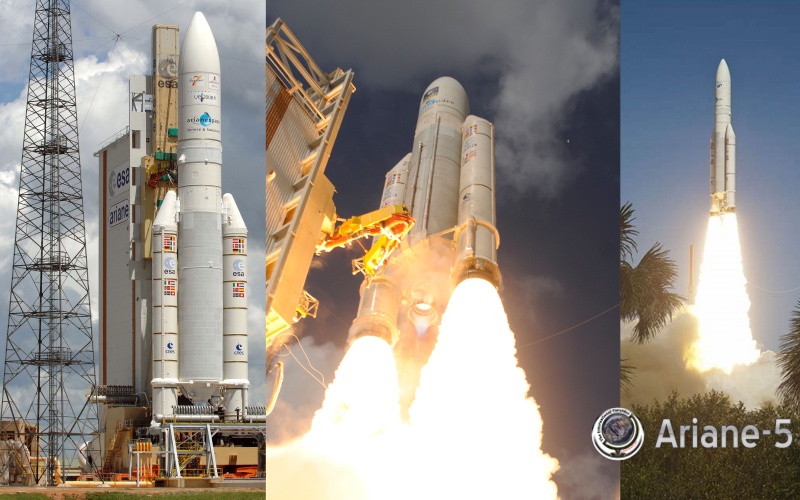 the most competitive heavy lift Rocket for a long time. This situation evolved with Space X and its Falcon Rocket which wrestled the first place from the European Booster. Ariane may still put up a fight with the new Ariane 6 which is expected to fly soon but that is another story. For all its attraction, Africa cannot emulate the European adventure and the reason for that is strictly a question of financial means. The European countries account for a total GDP of 17.1 trillion USD(2022) and the annual budget of the European Space Agency was 7.9 billion dollars. Compare that to the combined GDP of all the African Countries for 2022 which is around 3.1 Billion dollars, while the totality invested in one year by the different African Space Agencies is far from the billion thresholds. Worse still, the launch cost of one Ariane 5 is 175 million USD, in other words the annual budget of the South African Space Agency (SANSA) would not be sufficient to afford even one launch. Astronomical numbers, denoting the enormous disparity between Africa and the European Union. (EU, which does not comprise all the countries of Europe it has to be remembered.)
It comes then as no surprise that the scope of financial investment needed would discourage the most fervent advocate of an African conquest of the last frontier. But as the saying goes, there are many ways to kill a cat. ESA’s financial model for Ariane being unaffordable, the option left to AfSA is only engaging in cooperation with commercial partners like Space X as for comparison, the launch cost of a Falcon 9 Rocket will turn around the 67 million USD and 97 million USD for a Falcon Heavy which are still onerous solutions. Let’s compare what is comparable. KARI the South Korean Space Agency, operates in 2023 on a budget of 619 million USD with half of it dedicated to satellite production, which makes it therefore quite comparable to the investment of African governments in the space industry. Despite a relatively small budget, this nation has operated from 2020, a military communications satellite, an urban and topographical monitoring satellite and out of the 2022 budget, 70 million was allocated to the Korean positioning system which consists of a constellation of 8 navigation satellites. Furthermore, the country is actively developing its three stage rocket carrier NURI which it successfully 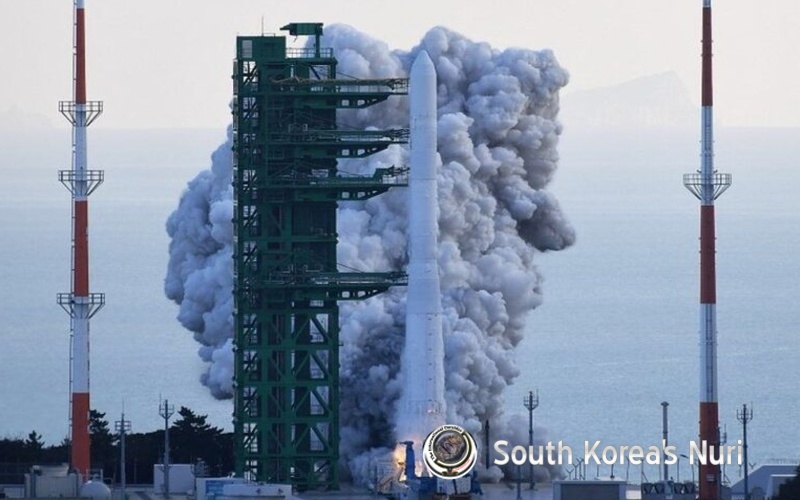 tested in 2021. For the 2029 horizon, the South Koreans plan an even more powerful rocket, the difficulty for this project is more about missile development concerns than a financial or technological issue. South Korea has also kick started a lunar exploration program demonstrating their capacities when the Asian nation launched Danuri, their lunar orbiter which successfully completed its mission in August 2022. The country is also developing is association with NASA, a lunar Lander. The ambitions of this small country exceed those of the whole African continent. Wikipedia writes that the main objectives of the South Korean Lunar mission were to enhance the South Korean technological capabilities on the ground and in outer space and to increase both the national brand value and national pride, a powerful lesson that should be taken in account by the African Governments. The South Korean Model is more affordable and would be an excellent option to emulate but even then, it would not be the answer as better can still be done.
Women In Space Matter. (Part 1)

What is not written does not exist.






© The International OutsiderC0.Reg.No SC715702 . All Rights Reserved. Design by HTML Codex

 by
by